



CPR Steps: Your Guide to Saving Lives
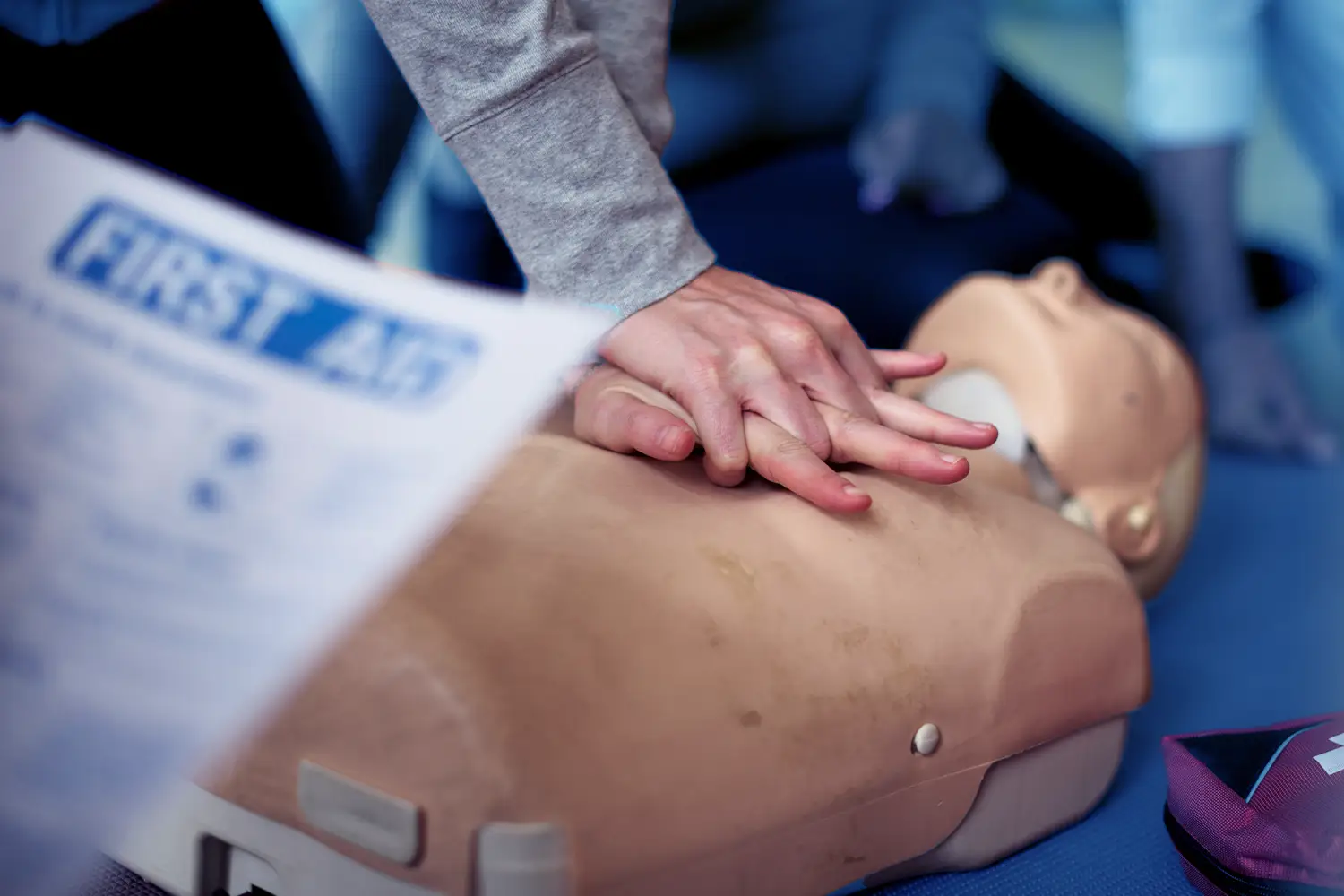
The steps of cardiopulmonary resuscitation (CPR) are simple, but you must learn them because they are extremely important. CPR is used as a quick and emergency treatment when someone stops breathing or when their heartbeat suddenly stops. Therefore, it is crucial to learn these steps to help you save the lives of others.
How do you correctly perform CPR steps in emergency situations?
There is more than one way to perform these steps, as they differ depending on whether CPR is hands-only, for adults or children, or whether you are trained or untrained in the procedure. Below are the correct CPR steps for each case mentioned:
Hands-Only CPR Steps
Here are six steps you must follow to properly complete the CPR process:
Place the person who is experiencing breathing difficulties or cardiac arrest flat on the ground. Kneel beside them and place the heel of your hand on the sternum in the middle of the chest.
Place the other hand on top of the first, interlocking your fingers.
Position your body correctly so that your shoulders are directly above your hands.
Press straight down to a depth of 5–6 cm, using your body weight rather than the strength of your arms.
Release the pressure to allow the chest to return to its normal position, keeping your hands on the chest to continue effectively.
Repeat compressions quickly at a rate of 100–120 per minute until a professional or ambulance arrives.
CPR with Rescue Breaths
CPR with rescue breaths is used in more severe situations. It is similar to hands-only CPR but includes breaths to help open the airway. Steps include:
Place the heel of your hand in the center of the chest (on the sternum). Put your other hand on top and interlock your fingers.
Begin pressing down with your body weight to a depth of 5–6 cm, allowing the chest to return to its normal position after each compression. Perform 100–120 compressions per minute.
After every 30 compressions, give 2 rescue breaths.
Tilt the head back gently and lift the chin with two fingers.
Pinch the person’s nose, seal your mouth over theirs, and blow steadily for about 1 second.
Ensure the chest rises with each breath, then give two rescue breaths.
Continue cycles of 30 compressions and 2 breaths until the person recovers or emergency help arrives.
CPR Steps for Children
The technique varies depending on the child’s age. CPR for children above 1 year differs from infants under 1 year old.
CPR for a Child (Above 1 Year):
Tilt the child’s head back gently and clear the mouth or nose of any obstruction.
Pinch the nose closed, cover the mouth with yours, and give 5 rescue breaths, ensuring the chest rises.
Place the heel of one hand in the center of the chest and press down about 5 cm deep. If needed, use both hands interlocked.
After 30 compressions, give 2 rescue breaths. Perform compressions at 100–120 per minute.
Continue cycles until emergency help arrives.
CPR for an Infant (Under 1 Year):
Open the airway by placing your hand on the infant’s forehead, tilting the head back gently, and clearing any obstruction.
Seal your mouth over the infant’s mouth and nose and give 5 gentle rescue breaths until the chest rises.
Place two fingers in the center of the chest and press down about 4 cm. You may use the heel of your hand if needed.
Perform cycles of 30 compressions and 2 breaths, at 100–120 compressions per minute.
CPR Advice from the American Heart Association
It’s important to consider these guidelines to avoid mistakes:
Trained and experienced: Check for breathing or a pulse for no more than 10 seconds. If none, immediately begin cycles of 30 compressions and 2 breaths.
Trained but inexperienced: Start CPR quickly, performing compressions at 100–120 per minute as described above.
Untrained: Place your hands in the correct position and perform compressions at 100–120 per minute, following the basic CPR method.
The Importance of CPR Knowledge
Learning CPR steps has many benefits:
Saving lives: Anyone can suddenly suffer from respiratory failure or cardiac arrest.
Time factor: Immediate action is vital, as minutes can mean the difference between life and death.
Confidence: Being trained allows you to respond calmly and effectively in emergencies.
Differences Between CPR for Adults and Children
Compression Depth:
Adults: 5–6 cm.
Children: 5 cm.
Infants: 4 cm.
Hand Placement:
Adults: Two hands, interlocked, pressing on the sternum.
Children: One or two hands depending on size.
Infants: Two fingers below the nipple line.
Compression Rate:
All ages: 100–120 per minute.
Compression-to-Breath Ratio:
Adults: 30:2.
Children: 30:2.
Infants: 15:2 (since breathing is more critical).
Chain of Survival:
Adults: Early recognition and emergency call.
Children: Immediate high-quality CPR, since respiratory issues are often the cause.
Common CPR Mistakes and How to Avoid Them
Not calling emergency services immediately.
Delaying the start of CPR.
Incorrect hand placement (must be on the sternum, not upper abdomen).
Not allowing the chest to fully recoil after each compression.
Inadequate depth or rate of compressions.
Not using an AED (Automated External Defibrillator) when available.
Officially Accredited CPR Training Courses
Many medical centers, such as Future Vision Institute in Saudi Arabia, provide accredited emergency training programs approved by the Saudi Commission for Health Specialties (SCFHS). These include:
Advanced Cardiac Life Support (ACLS).
Pediatric Advanced Life Support (PALS).
Neonatal Resuscitation Program (NRP).
Basic Life Support (BLS).
FAQs about CPR Steps
Can CPR be learned online?
Yes, institutions like Future Vision Institute offer SCFHS-accredited online training.
When should CPR be stopped?
When emergency personnel arrive.
When the patient begins breathing or moving.
When an AED instructs you to pause for rhythm analysis.
Related Items
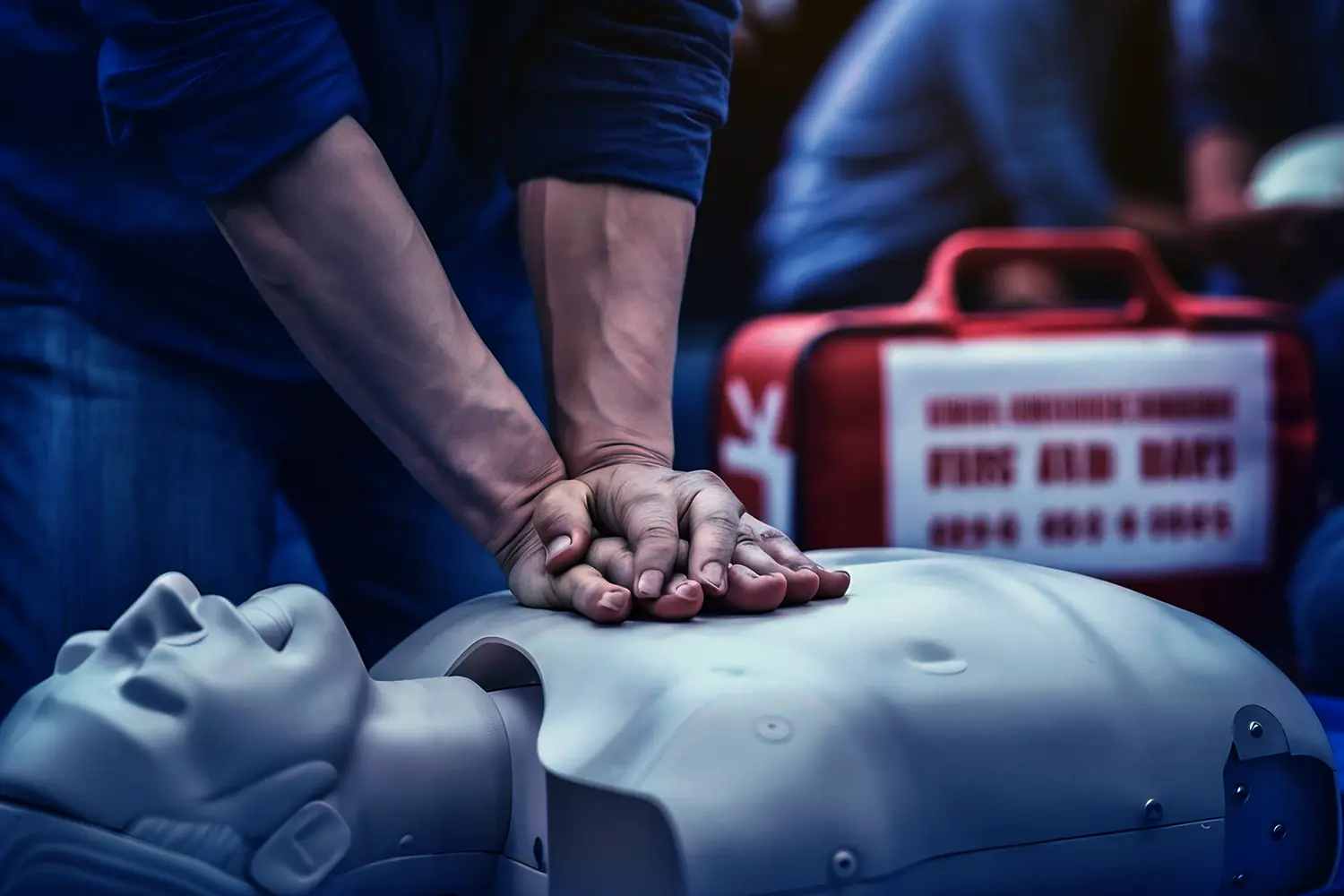
Accredited Medical Courses to Develop Healthcare Skills
Discover the most popular and essential accredited medical courses every healthcare practitioner needs to enhance their professional competence. Explore the top training programs in first aid, nursing, infection control, and healthcare facility management. Your comprehensive guide to choosing the best medical course that aligns with your career path.
CPHQ Certification: A Professional Accreditation for Leading Healthcare Quality
Get your CPHQ certification and enhance your skills in healthcare quality management and patient safety, advancing your professional future with confidence and professionalism.

Presence of Future Vision Company at the Toxicology Exhibition
Discover Future Vision Company’s participation in the Toxicology Exhibition, where innovation and expertise come together to deliver the latest specialized solutions and build strategic partnerships that reflect its future vision.

Certified Health Courses to Enhance the Efficiency of Medical Staff
Discover the best certified health courses that enhance your skills and expand your expertise in the medical field. Boost your efficiency and advance your career with specialized training programs tailored to your needs.